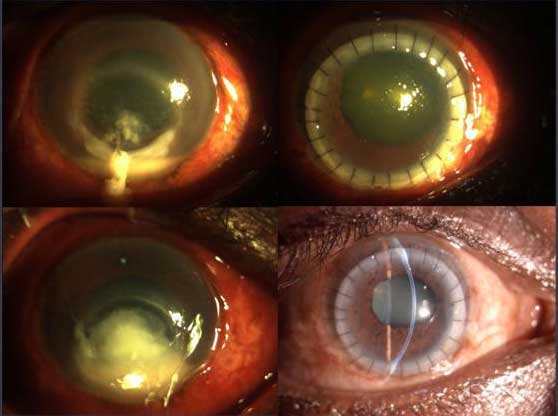
Fungal keratitis is not uncommon in India, and this is probably due to a combination of the hot tropical climate and a largely agrarian economy. Injury with vegetative matter is an important cause for fungal keratitis. Recognizing the fungal cause of the corneal infection is extremely important, as it does not respond to the commonly used first-line fourth generation fluoroquinolone antibiotic drops, unlike bacterial keratitis. A delay in recognizing the fungal cause of the keratitis, and instituting the appropriate antifungal agents, can result in significant corneal morbidity and vision loss.
A study from Aravind Eye Care system, has shown that much of the fungal infections in South India, are due to filamentous organisms, and they respond better to natamycin eye drops, rather than voriconazole eye drops. These infections typically have a dry stromal infiltrate, with hyphate edges, and satellite lesions, and the signs can exceed symptoms at the start of the infection. Yeast infections, usually by candida, are rare and are seen in immunocompromised patients. These infections can be multiple, have fluffy stromal infiltrates and do not respond to natamycin eye drops.
They respond better to fluconazole, amphotericin B and voriconazole eye drops. Hence, determining the fungal cause of infectious keratitis, and the type of fungal organism at an early stage helps institute appropriate therapy and promotes corneal healing. This will require corneal scrapings and cultures.